Translate

Showing posts with label World Travel News. Show all posts

Tuesday, December 17, 2013

The strangest Christmas traditions all over the world

Christmas is mostly about celebrations, gift-giving, merry-making and church-attending. There are so many different elements that contribute to the celebration that we have come to know as Christmas.

Here are some of the strange things people around the world do for Christmas in the name of celebration.

Iceland: The Yule Cat (Jolakotturinn)

The Icelandics are big fans of myths and of hard work. (They have the most overtime in Europe.) One famous Christmas character is the scary Yule Cat who eats children who haven't worked hard enough. Basically, if you have finished all your work before Christmas you get new clothes and you are safe. The scary Icelandic Yule cat only looks for the lazy ones in old clothes. A good reason to go clothes shopping.


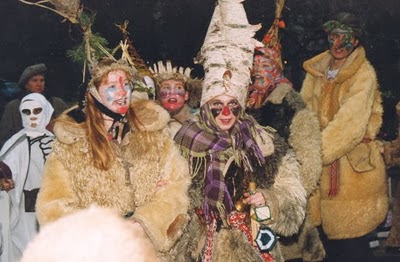
LATVIA: MUMMERS

The tradition of mummers is associated with the winter solstice more than Christmas. It dates back to pagan times when people would try to employ magic to encourage the sun to return before daylight completely disappeared. In Britain, mummers perform small dramas about the struggle between the sun and the forces of winter -a tradition that survives to this day in some areas. In Latvia, Christmastime is still a solstice holiday, and is often celebrated from December 22nd through the 25th. Customs of a Latvian Christmas are usually traced to activities that encourage the return of the Sun Maiden. Latvian mummers are more like Halloween trick-or-treaters, going from house to house wearing masks, usually disguised as some kind of animal or the spirit of death. They play music and bestow blessings on the homes they visited, and are given food to eat.

Sweden: Find the almond in the rice pudding 
In Sweden, you eat rice pudding at Christmas (before or after the Smorgasbord) and the big question is: Who will get the almond? There is one peeled almond hiding somewhere in the rice pudding and the lucky one who gets it will get married within a year.


ICELAND: YULE LADS

The Jólasveinar, or Yule Lads, are Icelandic trolls. In ancient times, they stole things and caused trouble around Christmastime, so they were used to scare children into behaving, like the Yule cat. However, in the 20th century, culture creep brought tales of the benevolent Norwegian figure called Julenisse (Santa Claus), who brought gifts to good children. He was the carrot while the Yule Lads were the stick. The traditions became mingled, until the formerly devilish Jólasveinar became kind enough to leave gifts in shoes that children leave out ...if they are good boys and girls. This gift-giving used to last for 13 days straight! That's because there are 13 Yule Lads, and they each have a name and distinct personality.


Czech Republic, Slovakia: Toss Your Shoes And Get Hitched
If you don’t want to celebrate another Christmas single, then try this: stand with your back to the door and throw a shoe over your shoulders on Christmas day! If the shoe lands with the toe pointing to the door, congratulations, you’re going to get married soon! There’s no clue as to how long before you meet your prince charming though.

Japan: KFC for Christmas dinner In many Japanese homes a KFC bucket with fried chicken is the main dish at Christmas. Thanks to a lack of turkeys and smart marketing by KFC the fried chicken is so popular you have to order weeks in advance for the holidays


Ukraine: Christmas trees dressed in spider webs
Spider webs in the house are typically considered at best, a nuisance, and at worst, a nightmare for the arachnophobic among us, but in Ukraine, Christmas trees are often decorated with (fake) spider webs to usher in good luck during the coming year. 

The legend goes that a poverty stricken family went to bed on Christmas eve despondent because they wouldn't be able to decorate their tree. The spiders, roaming the home's walls and floors, heard the cries of the family, and took it upon themselves to decorate the tree with their webs. On Christmas day, the strands turned to gold and silver, changing the family's fortune forever.


Thursday, September 5, 2013

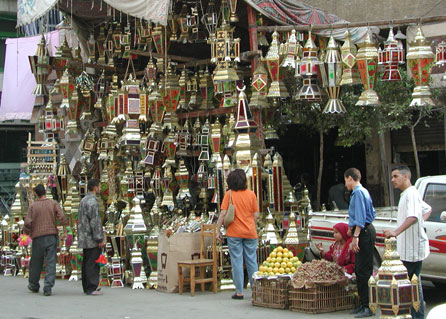
Ramadan in Egypt

Ramadan is the ninth month of the Islamic calendar and the most important month in the Islamic Calendar for Muslims, the majority religion in Egypt. Commemorating the time when God revealed the Qur'an to Mohammed, during this holy month, Muslims abstain from eating, drinking or smoking until after sundown on each day. Although strict adherence to Ramadan is for Muslims only, some Muslims appreciate that non-Muslims do not take meals or smoke in public places. During Ramadan, many restaurants and cafes won't open until after sundown. Public transport is less frequent, shops close earlier before sunset and the pace of life (especially business) is generally slow.
As expected, exactly at sunset minute, the entire country quiets down and busy itself with the main meal of the day (iftar or breaking-fast) that are almost always done as social events in large groups of friends. Many richer people offer (Tables of the Gracious God) in Cairo's streets that cater full-meals for free for the passers-by, the poorer ones or workers who couldn't leave their shifts at the time. Prayers become popular 'social' events that some like to enrich with special food treats before and after. An hour or two later, an astonishing springing to life of the cities takes place. Streets sometimes richly decorated for the whole month have continuous rush hours till very early in the morning. Some shops and cafes make the biggest chunk of their annual profit at this time of year. Costs of advertising on television and radio soars for this period and entertainment performances are at their peak.

Nice picture describe Ramadan in Egypt


Wednesday, August 28, 2013

Egypt travel advice: is it safe to go?

Should I travel to Egypt?


The Foreign and Commonwealth Office (FCO) advise against all travel to the Governorate of North Sinai due to the significant increase in criminal activity and recent terrorist attacks on police and security forces that have resulted in deaths. See North Sinai

In view of continued unrest and the evolving political situation in Egypt, the FCO advise against all but essential travel to the rest of Egypt except for resorts on the Red Sea in South Sinai and those resorts on the Egyptian mainland in Red Sea governorate (including Hurghada).

In the governorate of South Sinai the FCO advise against all but essential travel, with the exception of (i) the Red Sea Resorts including those in the entire region of Sharm el Sheikh, Taba, Nuweiba and Dahab; (ii) the St Catherine’s Monastery World Heritage Site; (iii) road travel between the Red Sea resorts; (iv) road travel from the Red Sea resorts to St Catherine’s Monastery approaching from the east; and (v) transfers between the resorts and the airports of Taba and Sharm el Sheikh. See South Sinai and Road travel.

The FCO do not advise against the use of Cairo airport as a transit stop providing you do not leave the airport grounds. There have been access problems on some of the roads to Cairo airport, chiefly Saleh Salem Road.

If you are already in a part of Egypt where the FCO advise against all but essential travel, you should consider whether you have a pressing need to remain. If you decide to remain in Egypt, you should stay at or close to home or a place of safety (eg your hotel), keep a low profile and pay close attention to your personal safety, particularly in the larger cities. You should avoid crowds.

You should follow the regulations set by the local authorities and obey curfews. Make sure you keep valid photographic identification with you at all times.


Protests and demonstrations

A curfew has been in place since 14 August. As of 24 August the curfew has been set for between 9pm and 6am local time Saturday to Thursday and between 7pm and 6am on Friday. This is expected to continue for several weeks. The governorates affected by this are Cairo, Giza, Alexandria, South Sinai (except for Sharm el Sheikh, Taba and Dahab) North Sinai, Suez, Behera, Minya, Assiut, Souhag, Beni Suef, Ismailia, Qena and Fayoum. A national state of emergency has been declared for Egypt for a period of 1 month.

You are strongly advised to avoid all demonstrations and large gatherings. If you become aware of any nearby protests, leave the area immediately. Do not attempt to cross road blocks erected by the security forces or protesters.

Red Sea resort areas

Enhanced security measures are in place to protect the resort areas. Egyptian military are situated in Sharm el Sheikh international airport, the entrance to the resort of Sharm el-Sheikh and the exit to the resort area of Dahab. Routine security checks are being performed on entry into the airport and the police are carrying out vehicle checks in Sharm el-Sheikh. There have been no violent protests in the South Sinai resorts during recent disturbances in Egypt. The resorts remain calm.


Travel Insurance

Take out comprehensive travel and medical insurance before you travel.


Tuesday, August 27, 2013

TWITTER HOTEL OPENS FOR SOCIAL MEDIA JUNKIES

The world's first Twitter-themed hotel

A new beach hotel in Majorca is encouraging guests to interact with staff and each other using Twitter as part of a virtual hotel community.

Guests at Sol Wave tweet with each other by logging onto Twitter via to a special web app available only through the hotel’s WiFi. Once inside, guests share pictures, send private messages, see who’s online and where they’re located inside the hotel, and send virtual kisses. Marco Fantón, Sol Wave House’s social media director, told TIME: “he sees the community as a fun and interactive extension of what guests are already doing on their vacations — showing off their trip using social networks like Facebook, Twitter, Instagram.”

Guests can contact the Twitter Concierges to have their fridge restocked, order room service or any other requests using hashtags.

They really drive home the Twitter theme at Sol Wave House with #TwitterPoolParty on Fridays where you can drink a Twitter-inspired cocktail and shot and when guests break the ice there is the Twitter Party Suite. These private party suites host up to four guests and come with bubbly, blue balloons, hashtag licorice, and a mirror that provokes a tweet-worthy moment. Guests can make requests such as filling the minibar with #FillMyFridge and send food and drink orders to others by the pool via a tweet to @SolWaveHouse. For other amenities and all the hotel has to offer be sure to check out their website.


Monday, August 26, 2013

Guide to visiting Jordan

Guide to Jordan


While it may be true that nine tenths of Jordan is semi-arid desert, the rest includes striking landscapes, all with plenty to entice the nature-lovers to explore; several nature reserves set up and protected by the Royal Society for the Conservation of Nature (RSCN) add a luxurious splash of jade to the baron amber wilderness, and offer a range of accommodation for keen eco-tourists. From the hustle and bustle of capital city Amman to the historic and beautiful sights of Petra, the cities of Jordan are awash with culture. A fusion of Arabic and traditional Mediterranean thanks to a largely immigrant population, Jordan is well worth a visit, if only to sample the fantastic cuisine

Where To Stay


FEYNAN ECO-LODGE AND DANA GUESTHOUSE

Feynan is a 26-room adobe lodge the colour of the desert around it, with solar-powered showers, candlelight at night and delicious vegetarian dinners, making it a peaceful retreat for wilderness- and nature-lovers.

FOUR SEASONS HOTEL AMMAN

Cool, calm neutrals with judicious splashes of red and mustard add to the serene atmosphere of this luxurious 192-room bolthole in one of the smartest districts in the city. The service is impeccable, as are the fabulous flower arrangements in the lobby.

HOTEL KEMPINSKI ISHTAR

Supposedly inspired by the Hanging Gardens of Babylon, this lavish 318-room resort on the shore of the Dead Sea is awash with pools, fountains and watery delights: a guilty pleasure in a country so short of the wet stuff.

MÖVENPICK RESORT PETRA

Handily located at the gates to Petra, this comfortable hotel has a spectacular neo-Damascene-style atrium with carved wooden balconies, a tinkling fountain and an exotic-looking ground-floor bar, but for peace and ice-cream the fourth-floor tearoom wins hands down.

EVASON MA'IN HOT SPRINGS

Secreted in a lush oasis at the bottom of a deep, rocky canyon, some 20 minutes' drive east of the Dead Sea, this is the Six Senses group's latest addition to its Middle Eastern spa properties. The shimmering sandstone edifice blends in seamlessly with the surrounding sheer rock walls, and its domes and arches give it the design-savvy look of an ultra-modern Arabian palace. Inside, this theme continues with a stylishly simplistic blend of pale pastel colours and low-slung, dark-wood furniture.

Sunday, August 25, 2013

Your Ticket to the 2014 FIFA World Cup

Your Ticket to the 2014 FIFA World Cup


The wait is over for soccer fans! Tickets to the 2014 FIFA World Cup are now on sale. Fans will be able to request tickets based on a random selection draw, from Aug. 20 through Oct. 10, and on a first-come, first-served basis from Nov. 5 through Nov. 28.

Fans are currently able to buy tickets based on the date and the venue of the match, or to follow their favorite team. Twelve cities in Brazil will host the best international soccer teams as they battle it out to become the FIFA World Cup champions. Host cities will include Fortaleza, Salvador, Manaus, Brasilia, Sao Paulo, Belo Horizonte and Porto Alegre.

In addition to hosting the World Cup matches, Rio de Janeiro will also host the 2016 Summer Olympics, making it a hot tourist destination over the next few years.
For now, it’s all about the World Cup. For more information on tickets and pricing, visit the FIFA website and or download the official guide to tickets.


Thursday, August 22, 2013

The seven Original Ancient Wonders of the world

The seven Original Ancient Wonders of the world

The Great Pyramid at Giza
Cairo, Egypt
It is the only surviving member of the Seven Ancient Wonders of the World.

Hanging Gardens of Babylon
Al-Hillah, Iraq
The Hanging Gardens of Babylon  have been built by Nebuchadnezzar II, a ruler of Babylon, around 600 B.C.

Temple of Artemis at Ephesus
Selcuk, Turkey
Completed around 550 B.C. to honor the Greek goddess of hunting and nature.

Statue of Zeus at Olympia
Olympia, Greece
This enormous statue honoring the god Zeus was built at the Temple of Zeus in Olympia around 450 B.C.

Tomb of Maussollos at Halicarnassus
Southwestern Turkey
The tomb built to hold the remains of the Persian king Mausollos and his wife, Artemisia, was designed by the Greek architects Satyrus and Pythius and constructed around 353 B.C. on a hill overlooking the ancient city of Halicarnassus.

Colossus at Rhodes
Rhodes, Greece
The Colossus of Rhodes was actually an enormous, looming 100-foot tall statue of the Greek god Helios, built on the island of Rhodes around 280 B.C.

Lighthouse of Alexandria
Pharos Island, Alexandria, Egypt
Scholars estimate the Lighthouse of Alexandria measured between 383 and 450 feet high and was built in the third century B.C. to act as a landmark for Pharos, a small island off the coast of Alexandria, Egypt.


Wednesday, August 21, 2013

Amazing kids game in an African tribe

An anthropologist proposed a game to the kids in an African tribe. He put a basket full of fruit near a tree and told the kids that who ever got there first won the sweet fruits. When he told them to run they all took each others hands and ran together, then sat together enjoying their treats. When he asked them why they had run like that as one could have had all the fruits for himself they said: ''UBUNTU, how can one of us be happy if all the other ones are sad?''

'UBUNTU' in the Xhosa culture means: "I am because we are"


Monday, August 19, 2013

How to Travel to Israel

How to Travel to Israel


By Air


Step 1
Make your flight reservations. A number of U.S. cities, including New York, Miami and Los Angeles, offer nonstop flights into Tel Aviv, home to Israel's largest international airport. Flights take approximately 12 hours from New York City.

Step 2
Fly to Israel and get a visa on arrival. U.S. citizens with valid passports are granted a visa on arrival at the airport for stays of up to three months in Israel. If you are planning on working, you need to have a letter of introduction from your Israeli employer. If you have dual citizenship, you are required to use your Israeli passport to enter and leave the country.

Step 3
Pass through customs and immigration. The customs process in Israel can be short and easy to get through, or it can take a few hours of questioning to get through. This is dependent on the nature of your trip and the types of stamps in your passport. If you have difficulty getting through, let the U.S. consulate or embassy in Israel know.


By Land


Step 1
Cross the King Hussein Bridge towards Jerusalem. Private cars are not allowed to pass across the King Hussein Bridge; however, a variety of taxis and tour buses ferry passengers across into Israel. Show your Jordanian-stamped exit slip to the Israeli border guards along with your passport. Crossings may take a few minutes to a few hours, depending on traffic.

Step 2
Travel between Aqaba and Eliat. Aqaba is in southern Jordan along the Red Sea, about five miles east of Eliat, in Israel. Crossings here generally are easy, as the border is traveled by many day trippers to Petra, about an hour's drive north of Aqaba in Jordan. You need to present both your Jordanian exit slip and your passport to the border guards.

Step 3
Use the Jordan River crossing. This crossing is in northern Israel and Jordan, and private cars are allowed to cross this border. It passes through the Galilee area of both countries, and traffic generally is lighter here than at the other two crossings between the two countries. Your passport and Jordanian exit slip are required at the Israeli border.

Sunday, August 18, 2013

Painting the Town in Taiwan

Painting the Town in Taiwan


Is graffiti always urban blight? Not in Taiwan, where officials are betting on street art as a force for tourism.

In Taipei’s Ximending district, vibrant stencils and letters brighten walls along America Street, a retail alley set aside by the government as a graffiti zone that allows “tagging” without repercussions.

On the east coast of Taiwan, murals outside Taitung’s grade schools and community centers depict the city’s aboriginal roots with tribal scenes of fishing and hunting.

In the industrial western port of Kaohsiung, artists have revitalized an empty warehouse district now known as the Pier 2 Art Center, where spray-painted walls frame fine-art galleries, and Kaohsiung’s cultural affairs bureau hosts exhibits and festivals.

On the other side of town at Zizhu Village, former Nationalist soldier housing was on the chopping block until local students reimagined its vacant shacks with paint and sculpture — and travelers took notice.

Then there’s Taichung’s 91-year-old “Rainbow Grandpa,” whose colorful brushstrokes turned a veterans’ refuge into Rainbow Village, a tourist favorite and officially designated cultural landmark. “I don’t smoke, I don’t drink, I don’t play mah-jongg,” says the self-taught artist. “I just paint.”

Thursday, August 15, 2013

The New Seven Wonders of Africa

The New Seven Wonders of Africa

Serengeti National Park
The largest and most famous of Tanzania’s national parks, the Serengeti is known the world over for its astounding wildlife .


Ngorongoro Crater
The Ngorongoro Crater is a caldera which is some 20km wide. With a permanent water and pasture source, the crater is host to almost every species of African animal. 

Mount Kilimanjaro 
The highest free-standing mountain in the world, Mount Kilimanjaro is also the highest peak in Africa, with Uhuru Peak reaching a height of 5895m.


The Nile River
At 6650 km long, the Nile River is the longest river in the world. From its sources in central Africa to the Nile Delta in Egypt, the river flows through 11 countries, eventually making its way to the Mediterranean Sea

The Red Sea Reef
Known across the world as one of the best spots to go diving, the Red Sea Reef stretches over 1240 miles along the coast of Egypt, Sudan and Eritrea. Nearly 1100 species of fish call the reef home, and nearly 10% of these are only found in this region. Dive the Red Sea in Egypt!


Sahara Desert
The world’s hottest desert, The Sahara isn’t (contrary to popular belief) the world’s largest desert, coming in third after the Antarctic and The Arctic. Who knew they were deserts? Nonetheless, the Sahara is pretty darn enormous, covering most of North Africa.


Okavango Delta

The world’s largest inland delta, the waters of the Okavango Delta are teeming with life and studded with exotic islands. Produced by seasonal flooding, the deltas waters don’t flow to the 
sea, but are instead evaporated.

Tuesday, August 13, 2013

Corpus Museum of Human body in Holland

Corpus Museum of Human body in Holland


The Corpus Museum takes you on a fantastic journey through a giant model of the human body during which you can see, feel and hear how the human body works and what roles healthy food, healthy life and plenty of exercise plays. The tour through the museum starts with an escalator ride into an open sore on your giant victim’s leg and ends among the pulsing neurons in his brain. Between those two points, you will watch cheese being digested in the intestines and explore the ventricles of the heart. Kids can bounce up and down on the rubber tongue (with burping noises in the background) while you take in various scents wafting through the giant nose. Perhaps the most unusual display is the hologram of sperm fertilizing an egg, viewed via 3D 
glasses.


Twitter Delicious Facebook Digg Stumbleupon Favorites More

 
Design by Free WordPress Themes | Bloggerized by Lasantha - Premium Blogger Themes | GreenGeeks Review